

Are you overwhelmed by the sheer volume of academic papers, struggling to synthesize complex literature, or seeking an efficient way to streamline your research process? If so, a comprehensive SciSpace review can shed light on how this innovative tool is revolutionizing the landscape of academic research. In this detailed exploration, we will cover what is SciSpace, how it works, its advantages and drawbacks, and why it might become your indispensable research companion. Whether you're a seasoned researcher or a graduate student delving into literature reviews, understanding the capabilities and limitations of SciSpace is crucial to harness its full potential. This SciSpace AI review aims to offer honest insights into its features, usability, and prospects, so you can make an informed decision about integrating it into your scholarly workflow.
What is SciSpace - An In-Depth Overview of the Revolutionary AI Research Tool
SciSpace is an advanced, AI-powered literature review platform designed to simplify the way researchers find, analyze, and synthesize academic literature. Unlike traditional search engines or database tools, SciSpace combines natural language understanding with extensive databases to provide insightful, semantic search capabilities. This means you no longer need to rely solely on keywords or Boolean operators; instead, you can ask questions in natural language and receive relevant research papers and summaries directly.
The core idea behind what is SciSpace is to make the research process more intuitive, less time-consuming, and more connected. It functions as an intelligent research assistant that not only helps locate relevant papers but also facilitates deeper analysis through AI-driven tools. From supporting systematic reviews to enabling quick comprehension of dense scientific materials, SciSpace serves as a multipurpose research partner. Its versatility extends across fields such as biology, engineering, social sciences, and more, thanks to its expansive database of over 282 million papers and smart features tailored for longitudinal research projects.
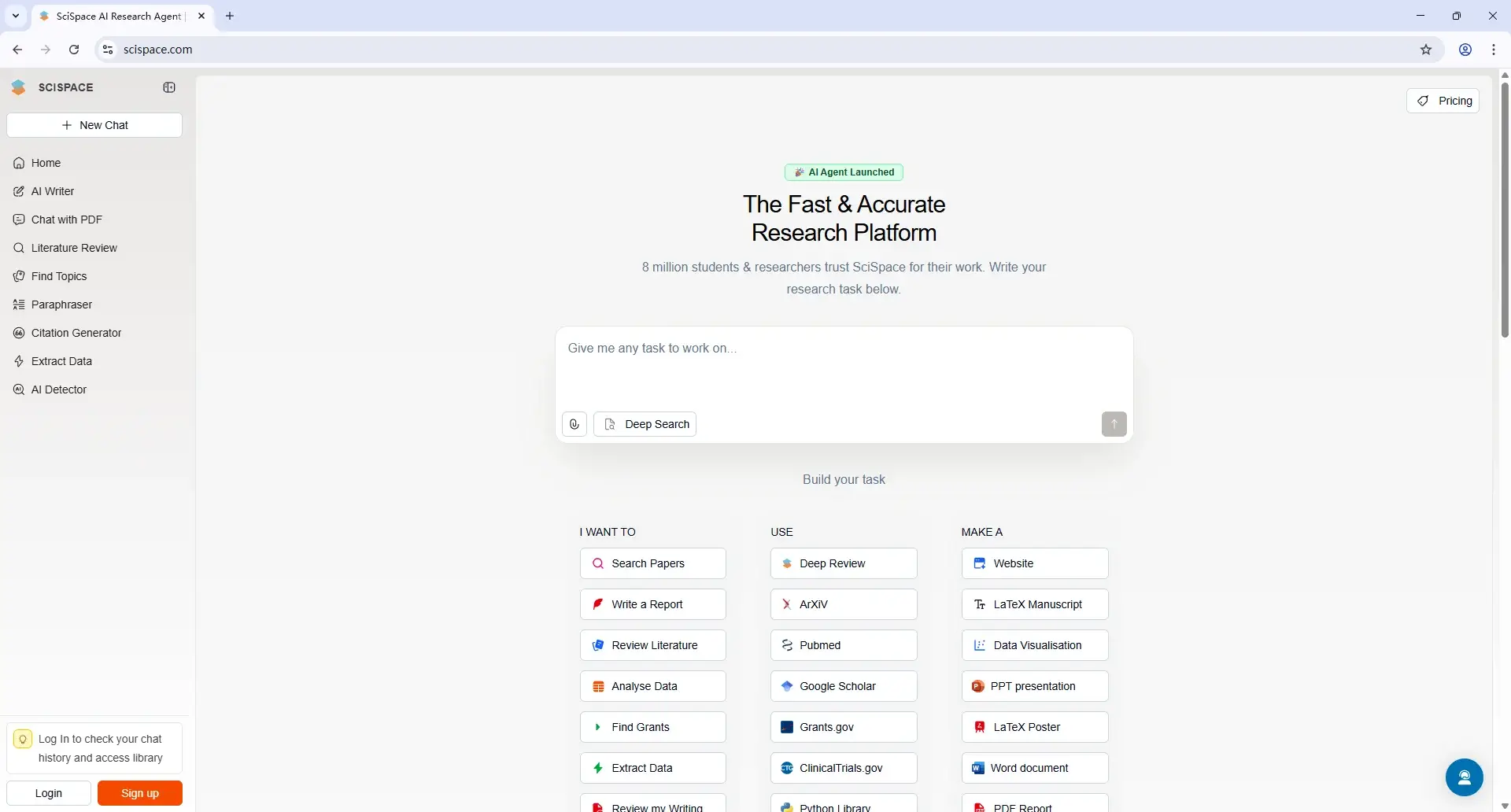
This tool incorporates features like semantic search, PDF analysis, text paraphrasing, AI-based insights, and integration with ChatGPT, making it a comprehensive ecosystem for researchers. The how SciSpace works aspect reveals that it combines AI comprehension with user-friendly interfaces, allowing users to interact seamlessly with research content in multiple ways—be it by asking questions, uploading PDFs, or automating literature reviews. Its design aims to mimic an intelligent research collaborator, saving scholars countless hours and mental effort, so they can focus more on scientific innovation than on administrative literature hunting.

Diving into how SciSpace works, one discovers a carefully orchestrated blend of AI technology, database management, and user-centered design. At its core, SciSpace employs natural language processing (NLP) to interpret user queries—whether they're questions, requests for summaries, or specific research criteria—and then cross-references this understanding with its vast internally indexed repository of research papers.
The platform's semantic search engine distinguishes it from traditional keywords-based databases. Instead of matching exact terms, it comprehends the intent behind your question, enabling it to deliver highly relevant results. For example, asking "What are the recent developments in climate change adaptation?" will yield a curated list of pertinent articles, summaries, and key insights, rather than just articles containing those words.
Beyond searches, SciSpace integrates several features that automate and support the literature review process. The platform automatically summarizes papers, highlights key findings, and generates discussion points. When dealing with PDFs, it allows users to upload documents and then interact with the content via its AI interface. You can ask the system to explain complex sections, paraphrase text, or extract specific data—transforming dense scientific reports into easily digestible insights. Its deep integration with ChatGPT Plus further amplifies its capabilities, providing a conversational environment for exploratory research and idea generation.
The automation of systematic review workflows is another integral facet. Users can create customized analysis columns, which the AI populates based on instructions, for example, to identify study limitations, methodologies, or relevance to specific topics. These processes involve advanced algorithms that scan through entire collections of PDFs, flagging relevant studies without the need for manual sifting. This synergy of AI comprehension and user control embodies the future of research assistive tools, making SciSpace not just an app but an AI-powered research partner.

Having understood how SciSpace operates, it’s essential to explore its strengths and weaknesses to determine if it genuinely fits the needs of researchers. Every transformative tool bears both benefits and challenges, and honest appraisals help set realistic expectations.
Advantages of SciSpace include its intelligent semantic search, which significantly reduces the time spent locating relevant literature. Unlike traditional databases that depend on exact keyword matches, SciSpace’s AI-driven understanding offers more nuanced and comprehensive results, ensuring fewer pertinent papers are missed. Its ability to analyze hundreds of papers simultaneously and generate structured insights is a game-changer for systematic reviews and meta-analyses.
Moreover, SciSpace’s PDF interaction features, including document summarization, paraphrasing, and content explanation, empower researchers to comprehend complex findings quickly. Its Chrome extension makes literature exploration seamless during web browsing, and the custom column analysis for PDF collections enables tailored data extraction—adding to its versatility. The platform’s integration with ChatGPT enhances user experience by offering conversational assistance, fostering a more intuitive research process.
However, the platform is not without limitations. As an AI-based tool, it occasionally produces inaccuracies or overly generalized summaries, especially with highly technical or niche literature. Its effectiveness heavily depends on the quality and comprehensiveness of the database, which, although vast, may include some outdated or less relevant papers. Furthermore, certain advanced analytical features require a learning curve, and the customization options, while powerful, may initially seem complex for new users.
Cost can be a barrier for individual researchers or small teams, especially if multiple analyses or comprehensive collections are involved. There's also the risk of over-reliance on AI summaries, which may inadvertently lead researchers to miss critical nuances or question the AI's contextual understanding. Overall, though, SciSpace presents a compelling fusion of AI and research methodology, altering traditional approaches while requiring careful integration into academic workflows.
The true value of SciSpace for researchers lies in its capacity to automate and enhance core aspects of scholarly work, from literature discovery to critical analysis. Its design caters to academia's increasing complexity, where vast amounts of literature demand efficient management and insightful synthesis.
One of the most compelling benefits is its potential for accelerating systematic literature reviews. Traditionally, these reviews require meticulous keyword searches, manual screening, and extensive note-taking. SciSpace simplifies this process by enabling question-based searches, AI summaries, and bulk PDF analysis. The ability to generate structured data and insights from collections of papers makes faster, more reproducible reviews possible—an enormous boon for researchers working under tight deadlines or resource constraints.
Furthermore, SciSpace’s collaborative potential is noteworthy. It can serve as a shared workspace where research teams compile collections, annotate findings, and analyze papers collaboratively. Its interactivity with ChatGPT allows for real-time brainstorming, hypothesis generation, and problem-solving, closely mimicking a scientific dialogue. This environment fosters creativity and critical thinking, especially for early-career researchers or interdisciplinary teams who may benefit from cross-disciplinary AI insights.
Despite these advantages, integrating SciSpace into existing research workflows necessitates thoughtful planning. It may not entirely replace traditional methods—such as manual verification or detailed qualitative analyses—but instead, should be viewed as a supplementary powerhouse that streamlines preliminary stages. Its ability to handle vast datasets and offer nuanced insights can elevate research quality, reduce mental fatigue, and open new avenues of inquiry, positioning SciSpace as an essential tool within the modern scholar's arsenal.

In sum, the SciSpace review reveals an AI research tool that intelligently bridges the gap between vast scientific knowledge and practical research needs. Its core strengths lie in semantic search, PDF analysis, customizable data extraction, and integration with conversational AI, making it an innovative companion for literature reviews, systematic analyses, and exploratory research. Despite some limitations related to accuracy and complexity, SciSpace's benefits in enhancing efficiency and insight-making are significant. For researchers aiming to stay ahead in an ever-expanding scholarly universe, SciSpace offers a promising glimpse into the future of academic discovery—combining the power of advanced AI with user-centric design to elevate scientific inquiry to new heights.